DDE-Pulse
Operational visibility for teams that need clearer control over requests, approvals, blockers, and project movement.
Client
Personal / Portfolio Project
Timeline
Underway — Beta
Platform
Web App / SaaS Concept
Tools
Framer, Figma, Notion, AI-assisted planning
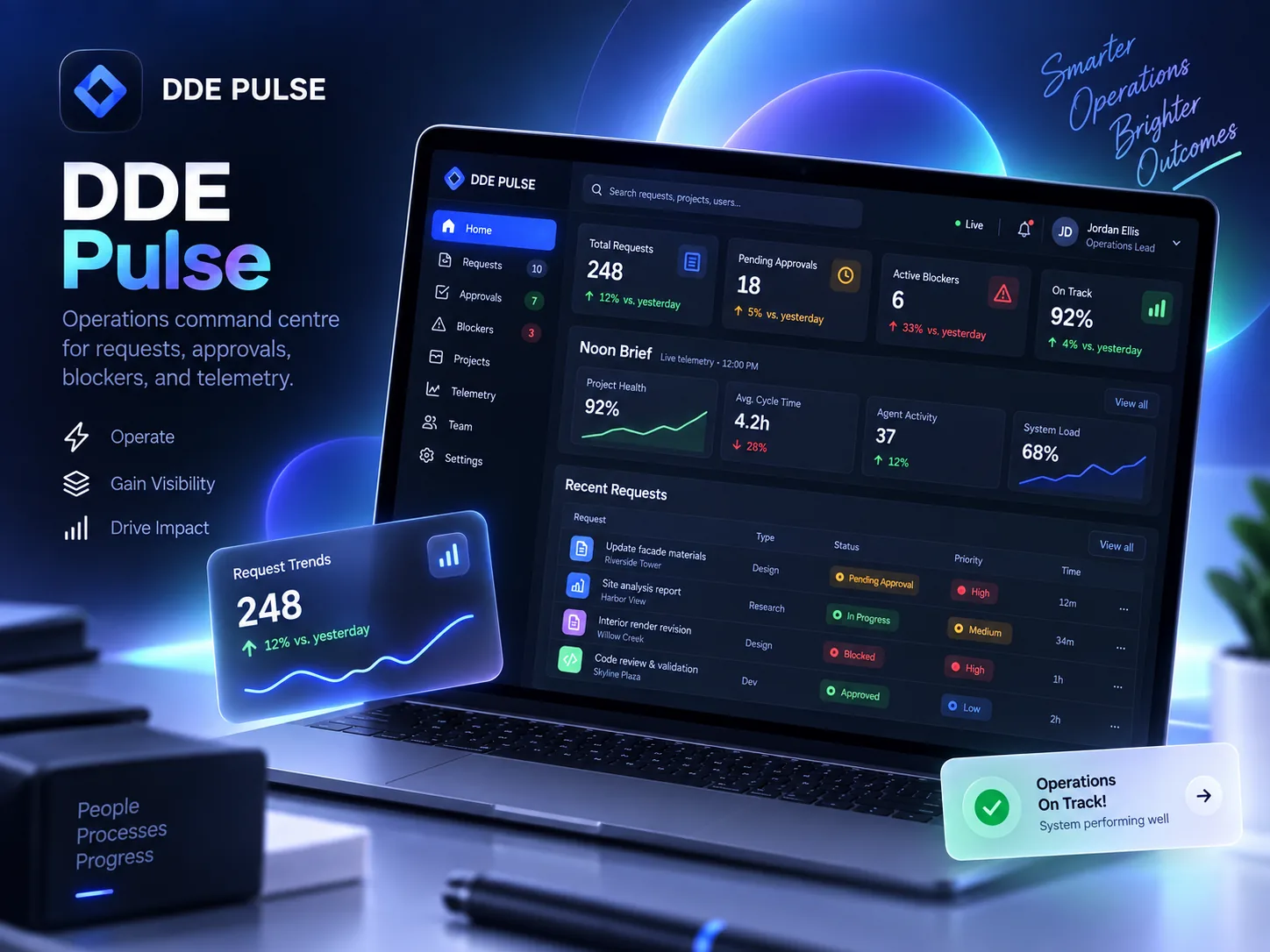
DDE-Pulse is an operations-focused SaaS concept currently underway in beta. It is designed to help teams monitor project health, manage requests, track approvals, identify blockers, and keep key activity visible across the project lifecycle. The concept comes from a practical operational problem: teams often lose time when updates are scattered, ownership is unclear, and follow-ups depend too heavily on manual communication.
Approach
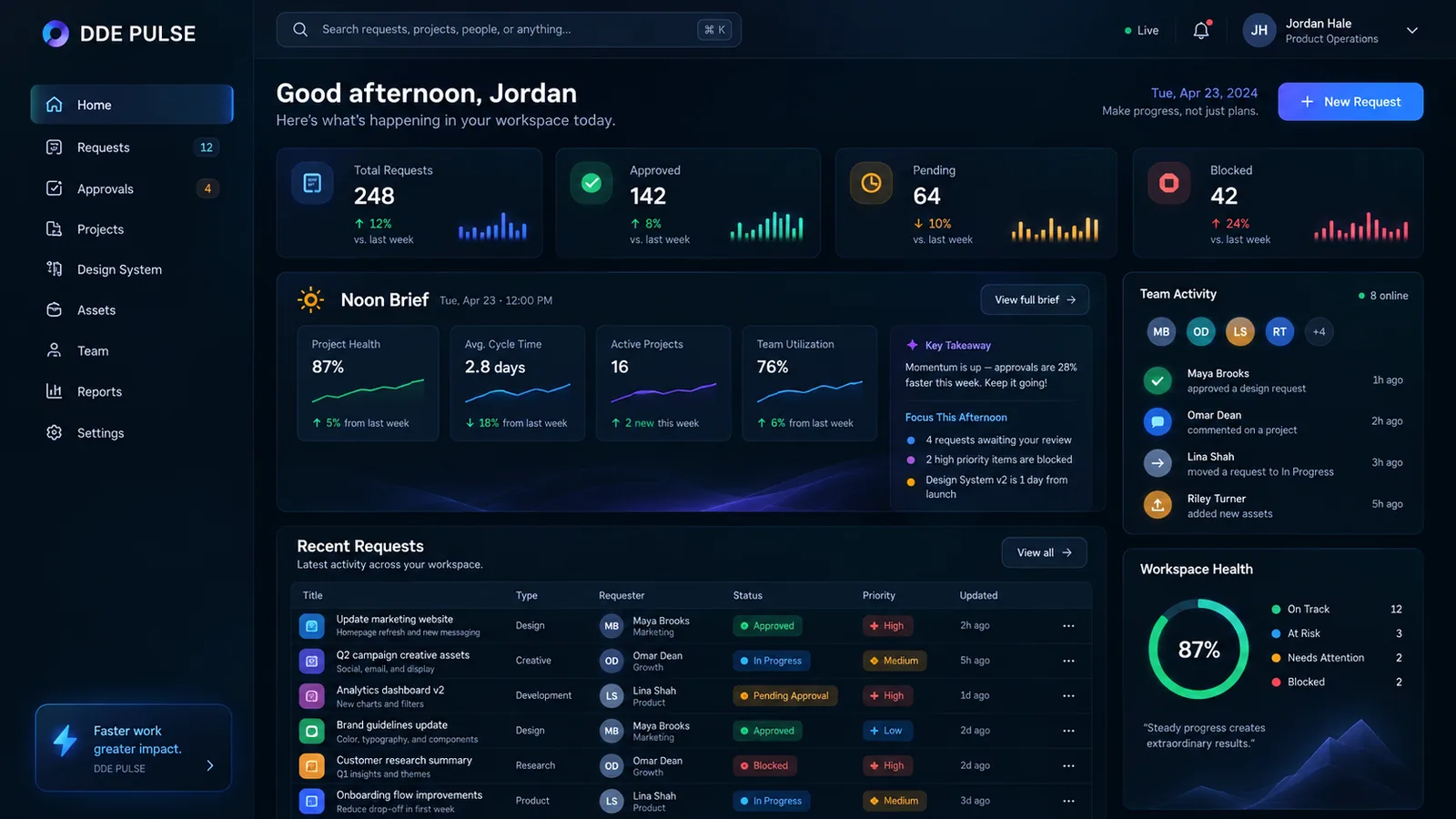
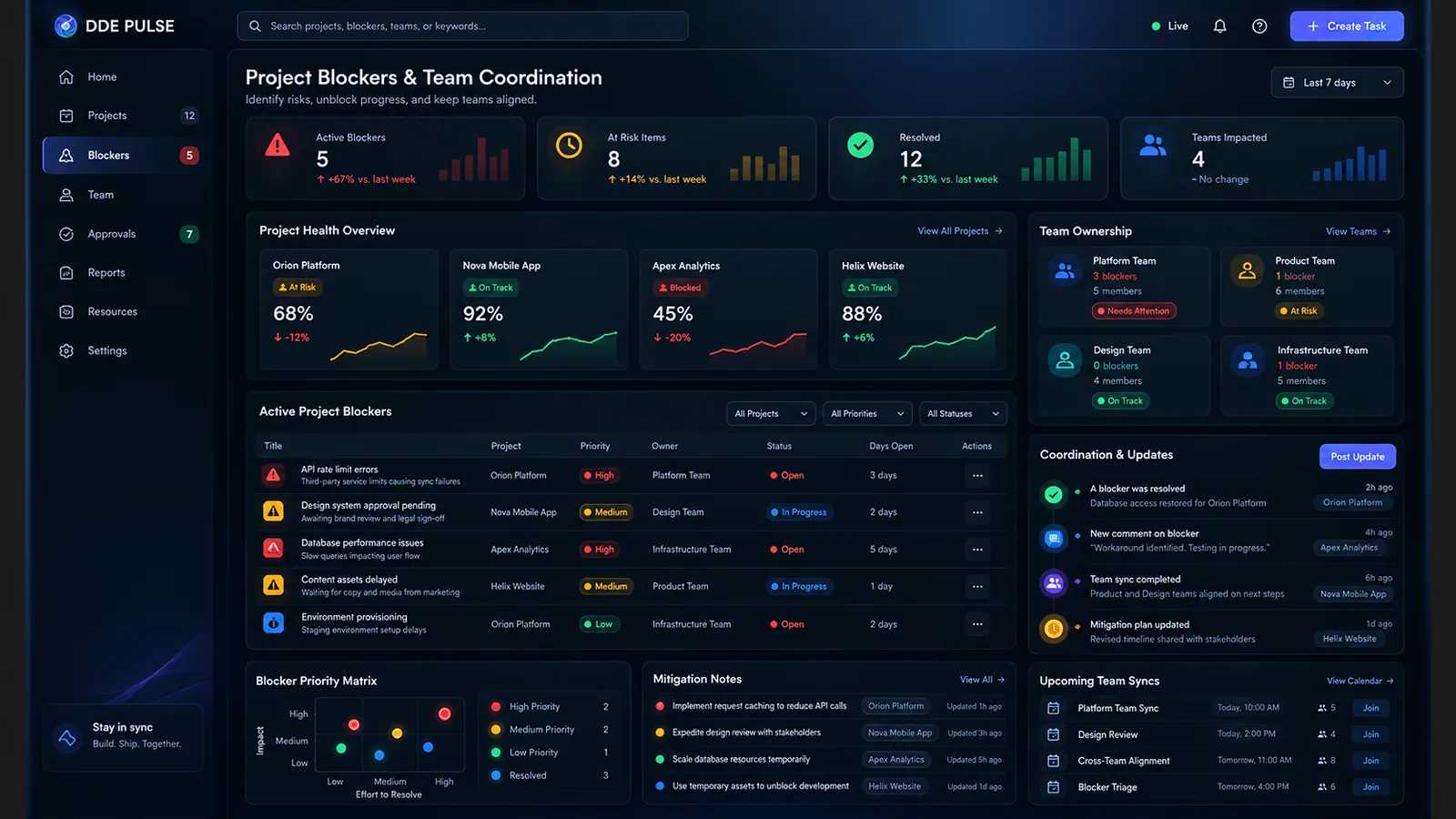
The project started with the need for a clearer way to understand operational movement. Instead of relying on scattered updates, separate messages, and manual follow-ups, DDE-Pulse is structured around a single dashboard that shows what is happening, what is pending, and what needs attention. Requests, approvals, blockers, metrics, and recent activity are organized into clear sections so teams can quickly understand the state of work without searching across multiple places.
- Map the key operational activities that need visibility.
- Separate requests, approvals, blockers, and activity into focused modules.
- Design the dashboard for fast scanning and decision support.
- Keep the product in beta language, not as a finished platform.
Vision & Innovation
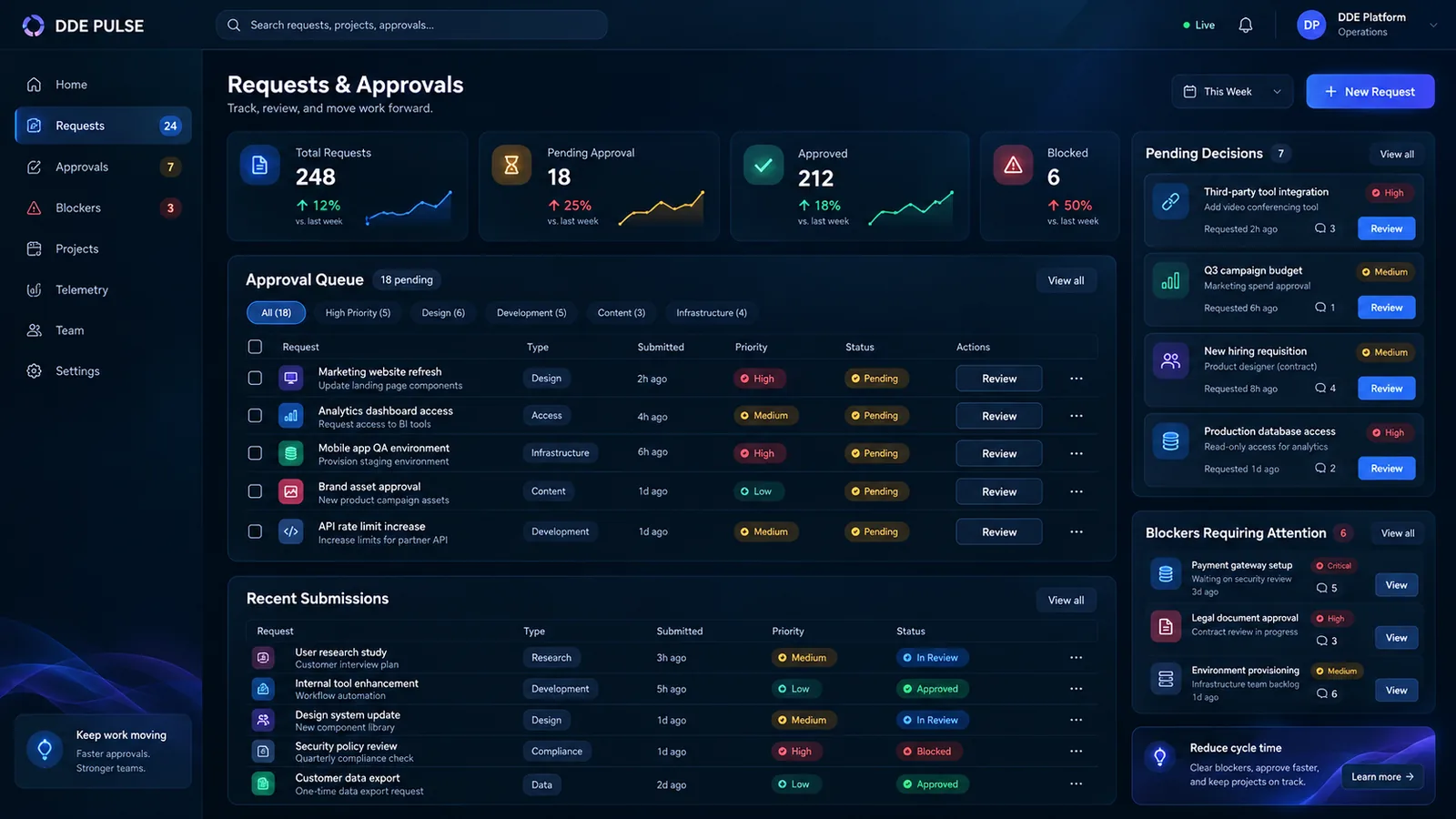
The vision for DDE-Pulse is to create an operational command center that helps teams work with more clarity and less friction. It is not meant to be a generic analytics dashboard. It is designed around real operational pressure: pending approvals, urgent blockers, unclear ownership, and the need to know what is moving. The innovation is in connecting operational thinking with SaaS-style interface design.
- Make operational work easier to scan and understand.
- Give teams a clearer view of project movement.
- Reduce dependence on manual follow-ups.
- Support faster decisions with structured information.
Challenges
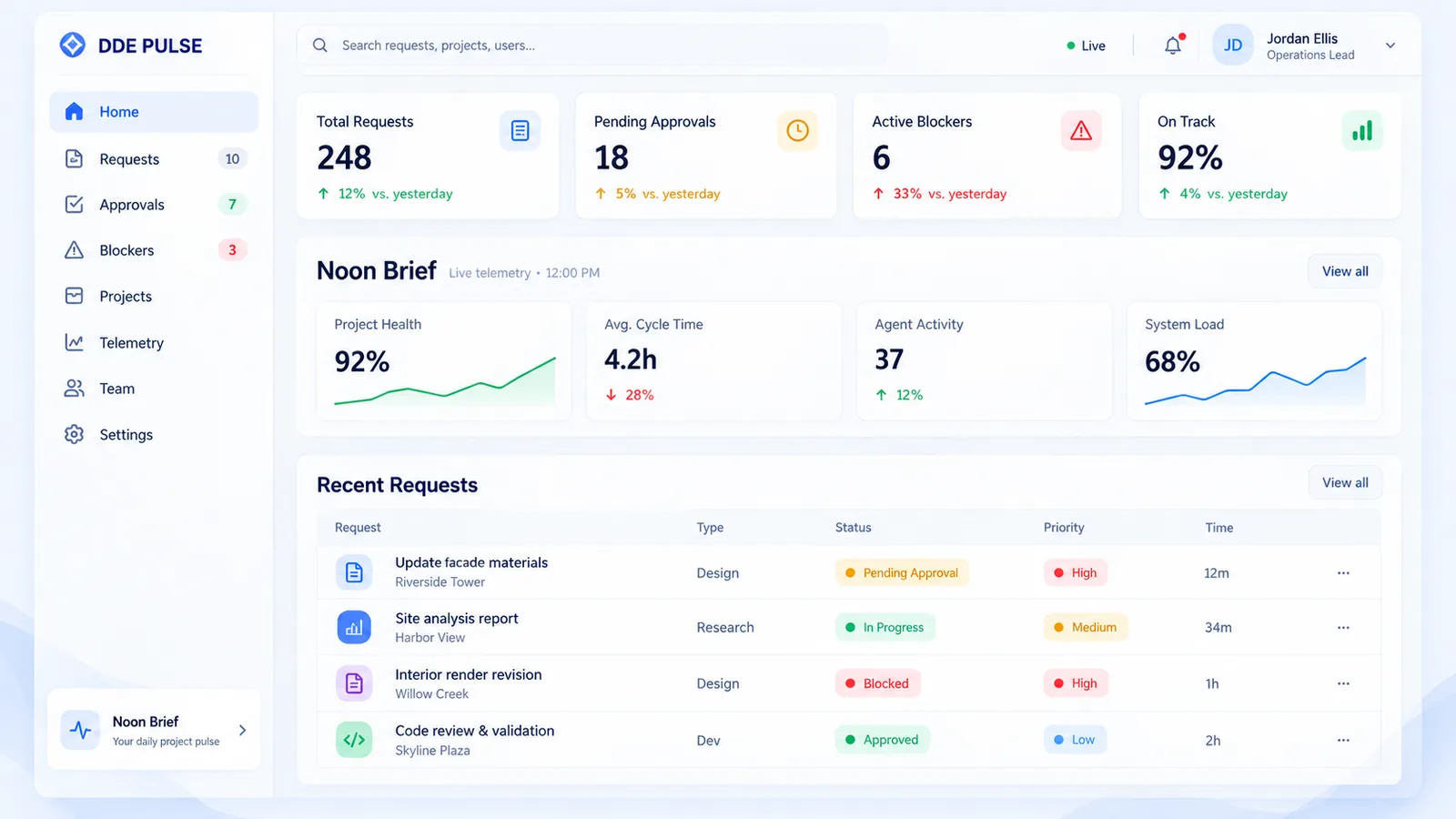
The main challenge is balancing information depth with simplicity. Operational dashboards can easily become overloaded with too many numbers, panels, and status labels. DDE-Pulse needs enough detail to be useful, but not so much that users feel overwhelmed. Another challenge is designing workflows that feel realistic for different users.
- Avoiding dashboard overload.
- Keeping metrics useful and readable.
- Designing clear status and priority indicators.
- Making beta-stage workflows feel realistic and practical.
Resolution
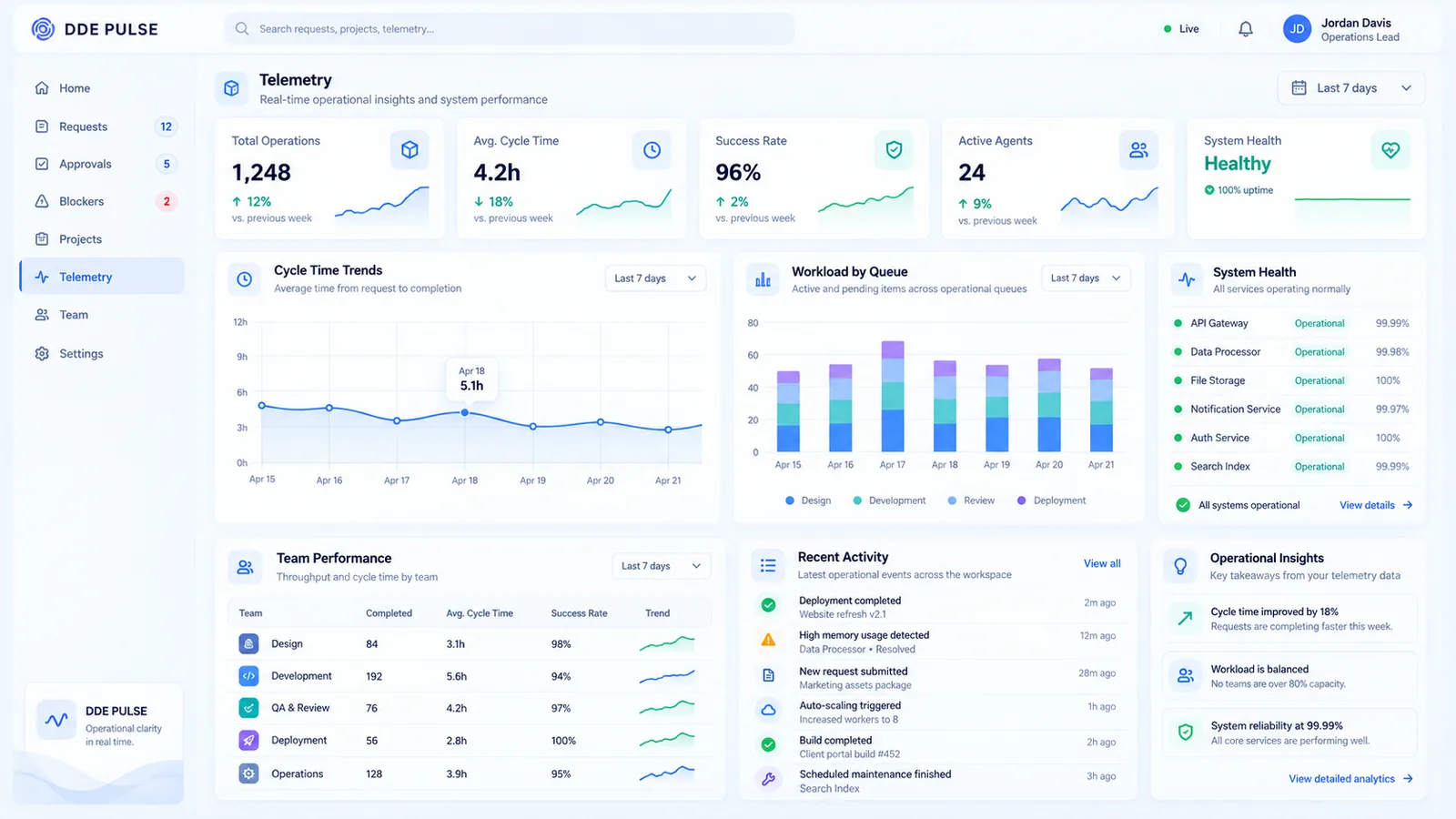
The concept resolves these challenges by using modular sections. Each area of the dashboard answers a specific operational question: what is pending, what is blocked, what needs review, and what is currently on track. This creates a more focused experience where users do not need to dig through disconnected tools to understand what needs action.
- Requests, approvals, blockers, and metrics are separated into clear modules.
- Activity is surfaced in a way that supports quick decisions.
- Status labels and priority markers make information easier to interpret.
- The interface supports operational clarity without unnecessary complexity.
User-Centric Design
DDE-Pulse is designed for users who need quick clarity. The layout supports fast scanning, clear hierarchy, and simple action cues. Important information is grouped in predictable places so users can understand what is happening without extra explanation. The design goal is to reduce uncertainty.
- Clear dashboard hierarchy.
- Readable status labels.
- Focused operational modules.
- Reduced friction for decision-making.
- Practical beta-stage product direction.
Explore more projects
See the full collection of SaaS concepts, workflow systems, and AI automation experiments.